Defamation Law in Thailand
Created on: Jul 4, 2026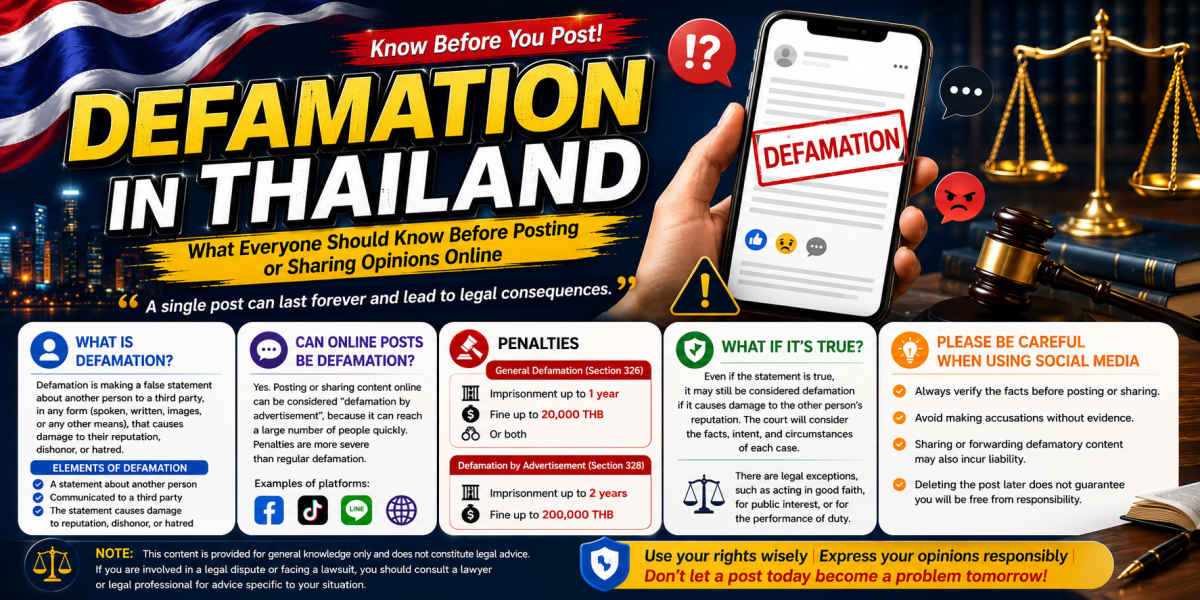
Defamation Law in Thailand: What Everyone Should Know Before Posting or Commenting
In an era where communication through social media happens constantly, posting, commenting, or sharing information in just a few seconds can lead to legal issues if the content falls under "defamation." Therefore, understanding defamation law is essential for everyone.
What is Defamation?
Under Section 326 of the Thai Criminal Code, defamation is defined as imputing anything to another person before a third party, whether by words, writing, images, or any other means, in a manner likely to impair that person’s reputation or expose them to hatred or contempt. The offender may be subject to legal penalties.
The key elements of defamation include:
- A statement or publication about another person
- The statement is communicated to a third party
- The statement may damage the reputation of the person concerned or expose them to hatred or contempt
Can Posting on Facebook, TikTok, or LINE Be Illegal?
Yes. If a post or shared content is made public or accessible to others, it may be considered defamation. Posting on online platforms can fall under "defamation by publication," which carries heavier penalties because it can reach a large audience quickly.
Penalties
General Defamation (Section 326)
- Imprisonment of up to 1 year
- Or a fine of up to 20,000 Baht
- Or both
Defamation by Publication (Section 328) Such as posting on social media, websites, or public platforms
- Imprisonment of up to 2 years
- And a fine of up to 200,000 Baht
If It Is True, Is It Still Illegal?
Many people believe that telling the truth is always lawful, but this is not entirely correct.
Even if the statement is true, if its publication damages another person’s reputation, it may still be considered defamation. Courts will evaluate the facts, intent, and legal exceptions on a case-by-case basis.
Exceptions That May Not Constitute an Offense
The law provides that certain statements made in good faith may not be considered defamation, such as:
- Statements made to protect one’s legitimate rights or interests
- Actions performed in the course of official duties
- Fair criticism on matters of public interest
- Honest and fair reporting of news or court proceedings
Precautions When Using Social Media
- Verify facts before posting or sharing
- Avoid making accusations without evidence
- Sharing or forwarding defamatory content may result in liability in some cases
- Deleting a post later does not guarantee exemption from liability if evidence has already been recorded
Conclusion
Defamation law aims to protect individuals’ reputation and dignity while balancing the right to freedom of expression. Exercising this freedom should be based on honesty, responsibility, and careful verification of information before sharing it.
Note: This article is intended for general informational purposes only and does not constitute legal advice. If you are involved in a dispute or legal proceedings, you should consult a lawyer or legal professional for advice tailored to your specific situation.
Contact us today for a consultation. Call : +66-84561-2299 or Click
บทความก่อนหน้า: หมิ่นประมาท
บทความถัดไป: Drug Offenses in Thailand